

Furniture looks convincing in photographs. Grain, colour and sheen photograph well — and that is exactly the problem. A veneered sideboard and a solid walnut sideboard can look identical on a screen and feel completely different in a room five years later.
This guide explains what “solid wood” actually means, six practical ways to tell the difference before you buy, and where veneer is a legitimate choice rather than a shortcut.
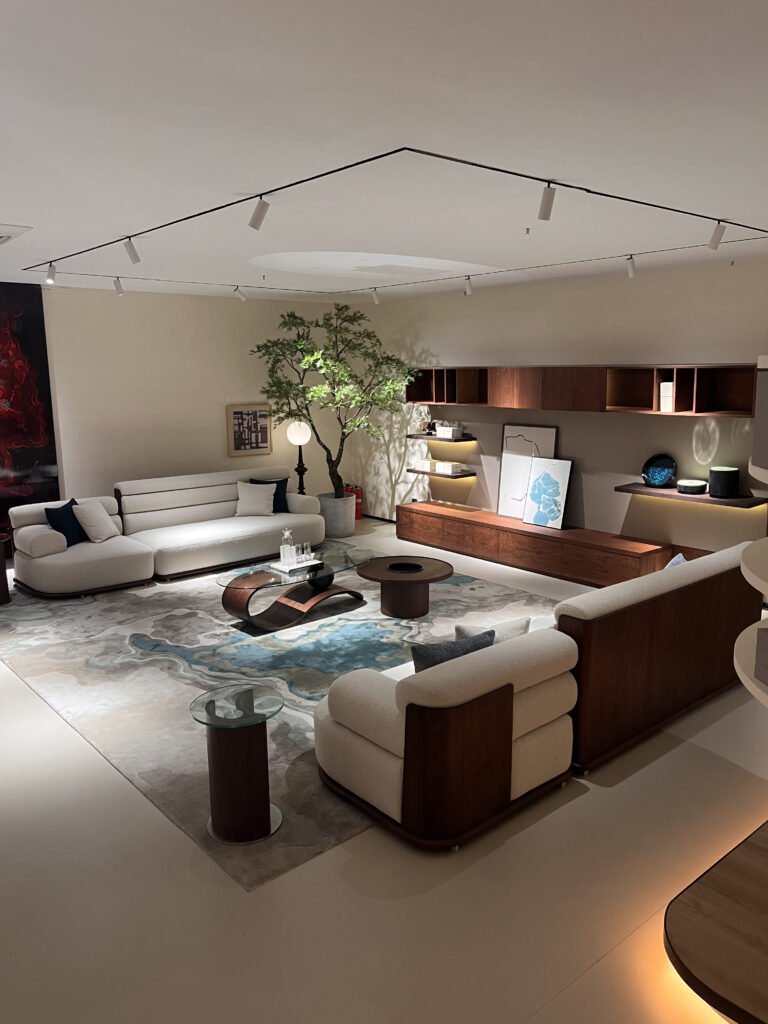
Why This Matters When Buying Online
When you buy furniture in a showroom you can lift a corner, open a drawer and run a hand along an edge. Online, you rely on a product description and a few photographs. The gap between what is advertised and what arrives is almost always about material, not design.
Material determines three things you cannot change later: how the piece ages, how it responds to humidity, and whether it can be repaired. Solid wood can be sanded and refinished decades later. A veneered panel with a paper-thin surface layer usually cannot.
What Counts as “Solid Wood”
The phrase is used loosely, including by manufacturers. Four categories matter:
1. Solid wood throughout. Every structural part — top, legs, frame, drawer sides — is solid timber.
2. Solid wood with auxiliary components. The main structure and all visible surfaces are solid wood; certain internal or non-structural parts (drawer bottoms, back panels, bed slats) use engineered board for stability. This is common practice in well-made furniture and, handled honestly, entirely reasonable: an engineered panel resists warping in a way a wide solid panel does not.
3. Veneer over engineered board. A thin layer of real wood, typically 0.5–1 mm, glued to MDF or plywood. The surface is real wood — the core is not.
4. Printed or laminated imitation. Paper foil or melamine printed with a wood pattern. No real wood at all.
Categories 2 and 3 are where most confusion occurs, and where sellers are least specific. The practical question is not “is there any veneer anywhere” but “which parts are solid, and which are not”.
Six Ways to Tell the Difference
1. Follow the grain around an edge
On solid wood, the grain pattern continues from the top surface onto the edge and the end grain, because it is one piece of timber. On veneer, the edge shows a cut line or a different pattern entirely — the top face has been glued on.
Ask for a close-up photograph of a corner. A seller who cannot provide one is telling you something.
2. Look at the underside and the back
The top gets photographed; the underside does not. Turn a table over, or ask for a photograph of the underside of a top or the back of a cabinet. Solid wood looks the same underneath — same grain, same colour, same texture. Veneered or board panels usually show a plain, uniform surface, visible screw patterns, or an edge-banding strip.
3. Weight and balance
Solid hardwood is dense. A solid walnut dining table of normal proportions is heavy, and the weight sits where the timber is. Board-based furniture is lighter and often feels top-light or hollow when lifted at one end. Weight alone is not proof — thick MDF is heavy too — but combined with the other checks it is a useful signal.
4. Knock on it
Rap your knuckles on a large flat surface. Solid wood returns a short, dry, relatively uniform sound. A veneered or hollow-core panel sounds flatter and more resonant, sometimes with a slight “tin” quality. This is not a laboratory test, but it is remarkably consistent once you have compared a few pieces side by side.
5. Smell
Real timber smells of timber — particularly when a drawer is opened or a surface is close to your face. Board products smell of adhesive and resin. The difference is not subtle, and it is one of the few checks photographs cannot fake.
6. Ask for the material specification in writing
This is the decisive test, and it costs nothing. Ask a direct question:
Which parts of this piece are solid wood, which are engineered board, and what species is the solid wood?
A manufacturer who works with solid wood answers this quickly and precisely. Vague answers — “it’s all wood”, “high-quality materials” — are an answer in themselves.
Is Veneer Always Bad?
No. Veneer is not a defect. It allows stable large panels, consistent surfaces and more affordable furniture, and high-quality veneered pieces can last for decades. Many well-regarded mid-century designs were specified in veneer from the start.
Two things are worth insisting on regardless:
- Accurate description. If a piece is veneered, the listing should say so. Buyers should not have to work it out.
- Honest construction where it matters. Load-bearing parts and joints belong in solid timber; surfaces that will be sanded in twenty years need enough thickness to survive it.
The problem is never veneer. The problem is a veneered piece sold as solid wood.
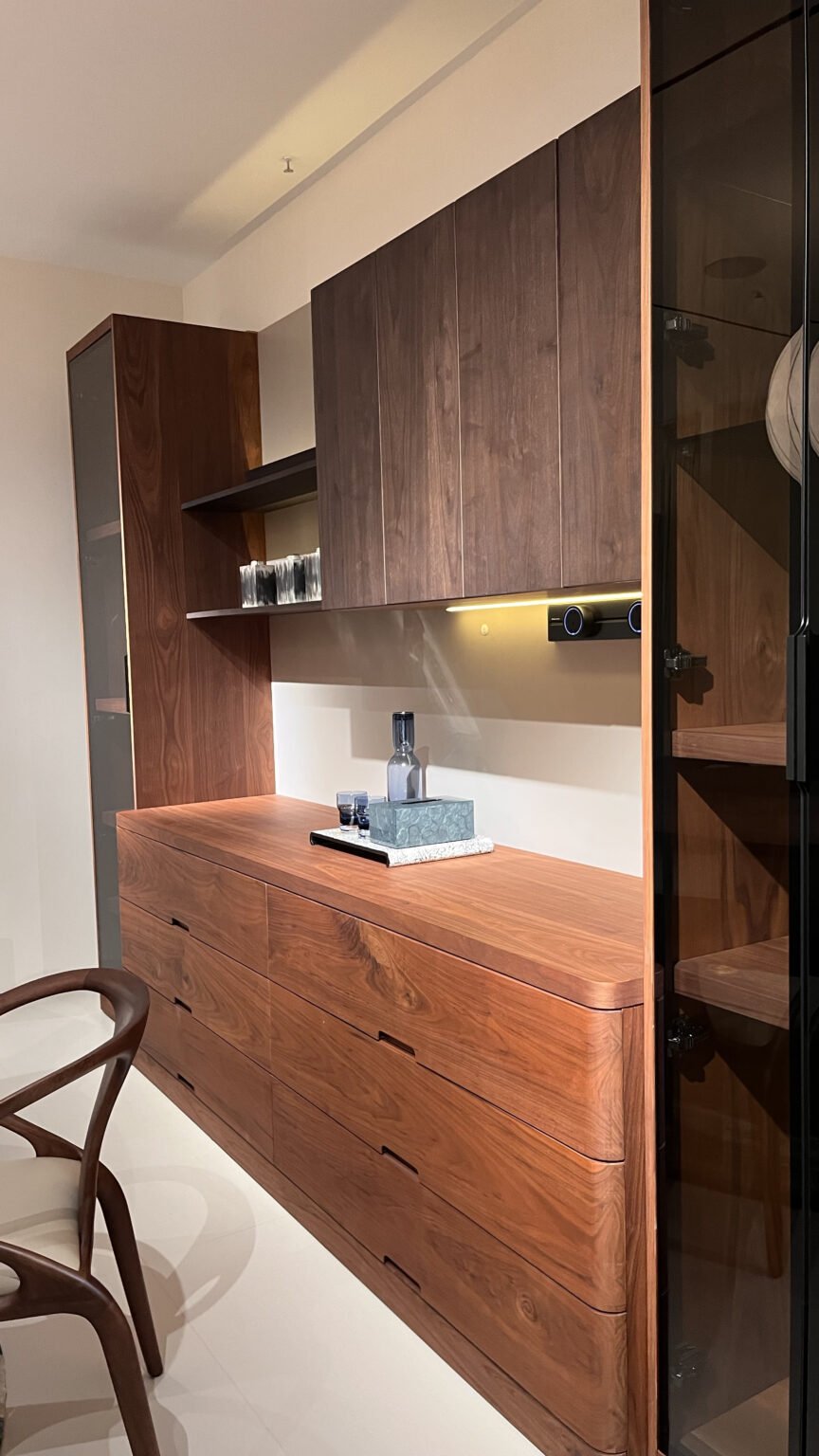
How We Build at LITAI
Our collections are built around solid wood. Main structures and all visible surfaces — tops, frames, legs, fronts, doors — are solid timber. We work in two species: North American black walnut for our walnut and Song Dynasty collections, and ovangkol (Guibourtia ehie, sold in the Chinese market as “African black ebony”) for our New Chinese Style collection. Both are imported, selected for grain and colour consistency, and kiln-dried and acclimatised before assembly.
We are equally clear about what is not solid. Some internal, non-structural components vary by model and may use engineered board, chosen for dimensional stability. Which parts are solid in any given piece is confirmed per model when you enquire — we would rather answer that question precisely than make a blanket claim that is not true of every design.
All timber is kiln-dried and acclimatised before assembly, and finished according to the collection: our New Chinese Style pieces carry a closed-pore finish that resists marking and wipes clean, while Song Dynasty pieces and our walnut collection use an open-pore finish that keeps the timber’s natural texture under your hand. Open-pore surfaces benefit from occasional oiling — the full walnut care routine is set out here — while closed-pore surfaces need little more than a damp cloth.
What This Means for You as a Buyer
You do not need to become a materials expert. You need three things: a close-up photograph of an edge, one direct written question about which parts are solid, and a seller willing to answer it.
Every piece in our collections can be ordered as a single item — there is no minimum quantity for individual buyers. We ship worldwide, with shipping calculated for your address and paid by the buyer; contact us for a quote on any piece, and we will confirm the exact material specification for that model at the same time.
The Short Version
- Solid wood carries its grain through edges and shows the same surface underneath; veneer does not.
- Weight, sound and smell are useful signals, but a written material specification is the only conclusive test.
- Veneer is a legitimate material; being described inaccurately is not.
- Ask which parts are solid, which are board, and what species the timber is — before you order, not after.
Have questions about a specific piece? Contact us or browse the full collection.
Related reading: North American Walnut: Care, Value and Seven Habits · What Is New Chinese Style? · What Is Ovangkol?
One Response